

Immobile prosthesis
Fixed prosthodontics is a series of restorations used for functional and aesthetic reasons. With them we can replace missing teeth or correct problems in teeth where some part of dental tissue is missing. These restorations are fixed, i.e. they remain permanently in the patient’s mouth without the patient being able to remove them.Fixed prosthodontics is a series of restorations used for functional and aesthetic reasons. With them we can replace missing teeth or correct problems in teeth where some part of dental tissue is missing. These restorations are fixed, i.e. they remain permanently in the patient’s mouth without the patient being able to remove them.
Wreaths
Crowns or crowns are a covering placed on the underlying tooth to restore its strength, shape, size and aesthetic appearance. When a crown is firmly in place, it “hugs” the entire visible part of the tooth from the gum line up. They are a very good choice, because they protect a tooth that is already damaged from more serious future problems.
We use crowns in the following cases:
- To protect a tooth that has a high chance of breaking due to extensive caries and large fillings.
- To restore an already broken tooth with extensive damage.
- To protect a tooth that has undergone endodontic treatment and we had to remove a large part of tooth substance.
- To improve the aesthetic image of a tooth in terms of its shape, size and color (in such cases, of course, we usually prefer veneers).
- To protect a tooth that is so badly damaged by caries that it cannot support a filling.
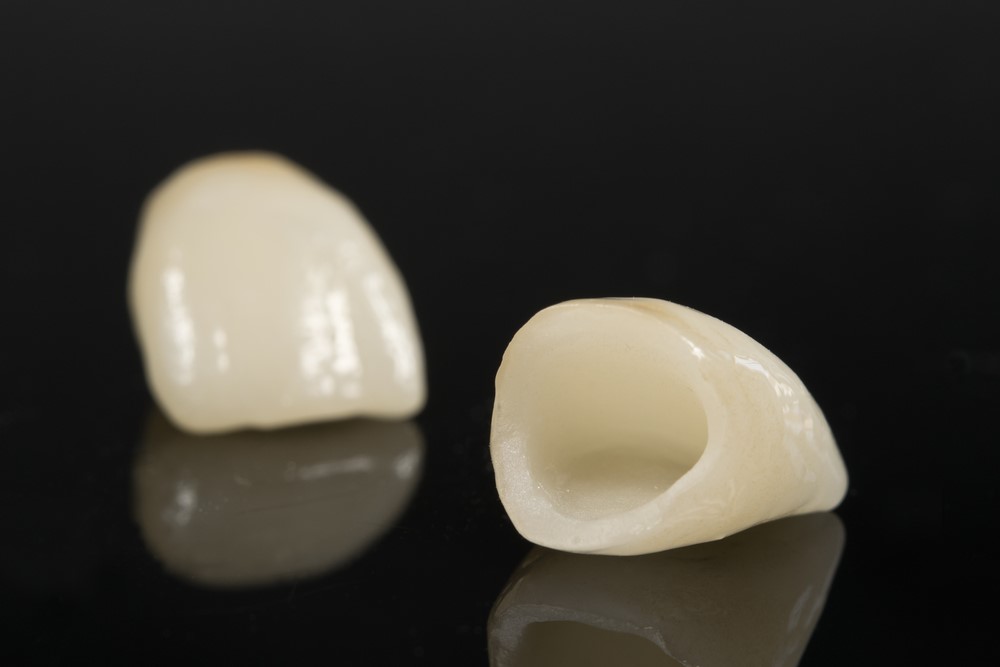
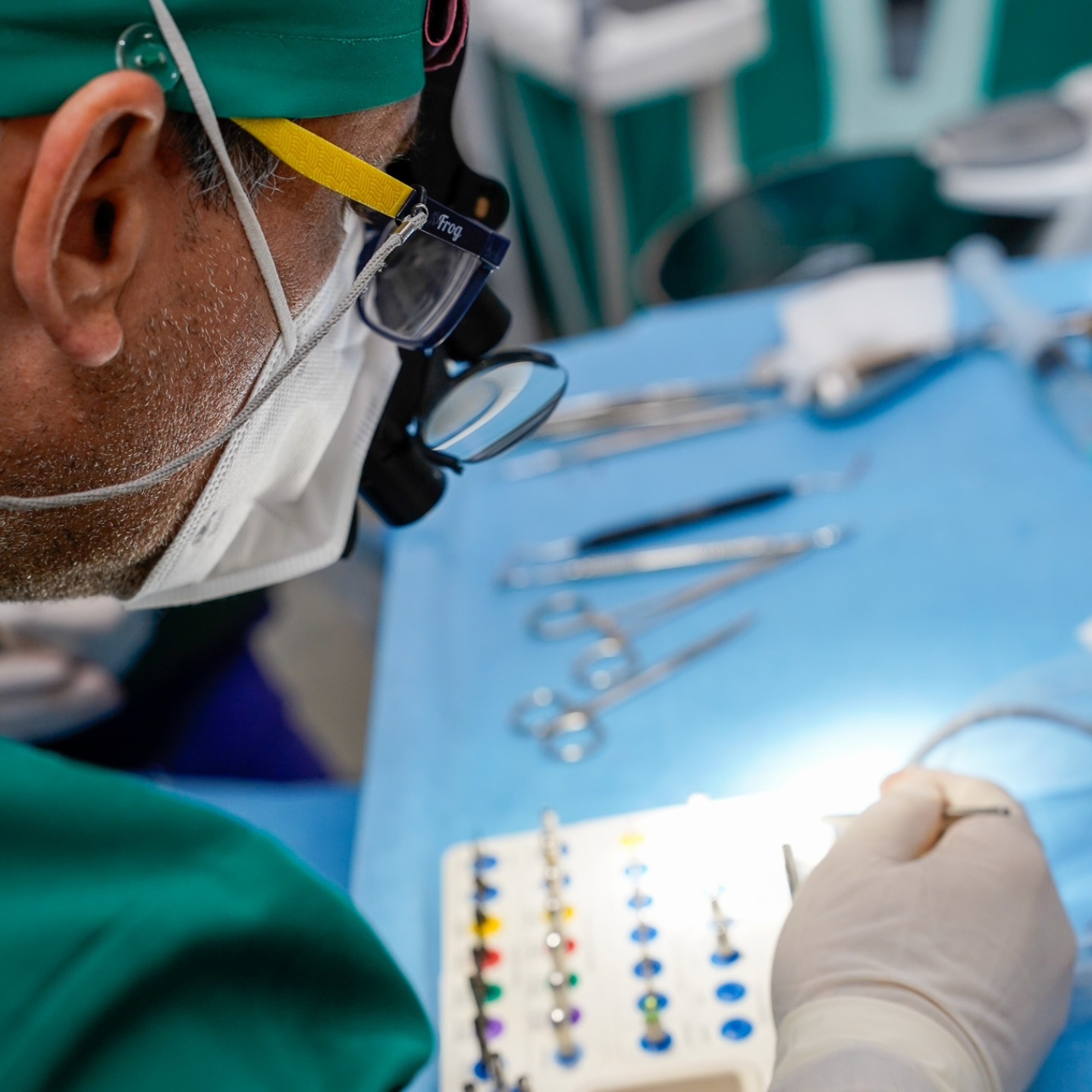
Before placing the case, we should first address any other dental problems that have not been treated. The placement process requires us to properly prepare the tooth to accept the crown. That is why we grind around the tooth and thus create the space for the addition of the restoration.
The crown is made in the dental laboratory based on the impressions previously taken. These ensure that the restoration will fit accurately and that there will be no occlusal problems. Until the crown is made, we cover and protect the tooth we have prepared with a temporary structure.
The crowns that offer the best aesthetic result are those made entirely of porcelain (all-ceramic). Thanks to porcelain, they can imitate the appearance, iridescence and transparency of the natural tooth, while they also have good durability.
Another option is metal-ceramic crowns that consist of a metal frame inside, which is covered by a ceramic material. They have excellent resistance but are aesthetically disadvantaged compared to all-ceramics. The reason is that the skeleton can become visible along the gum line in the form of a dark line.
Bridges
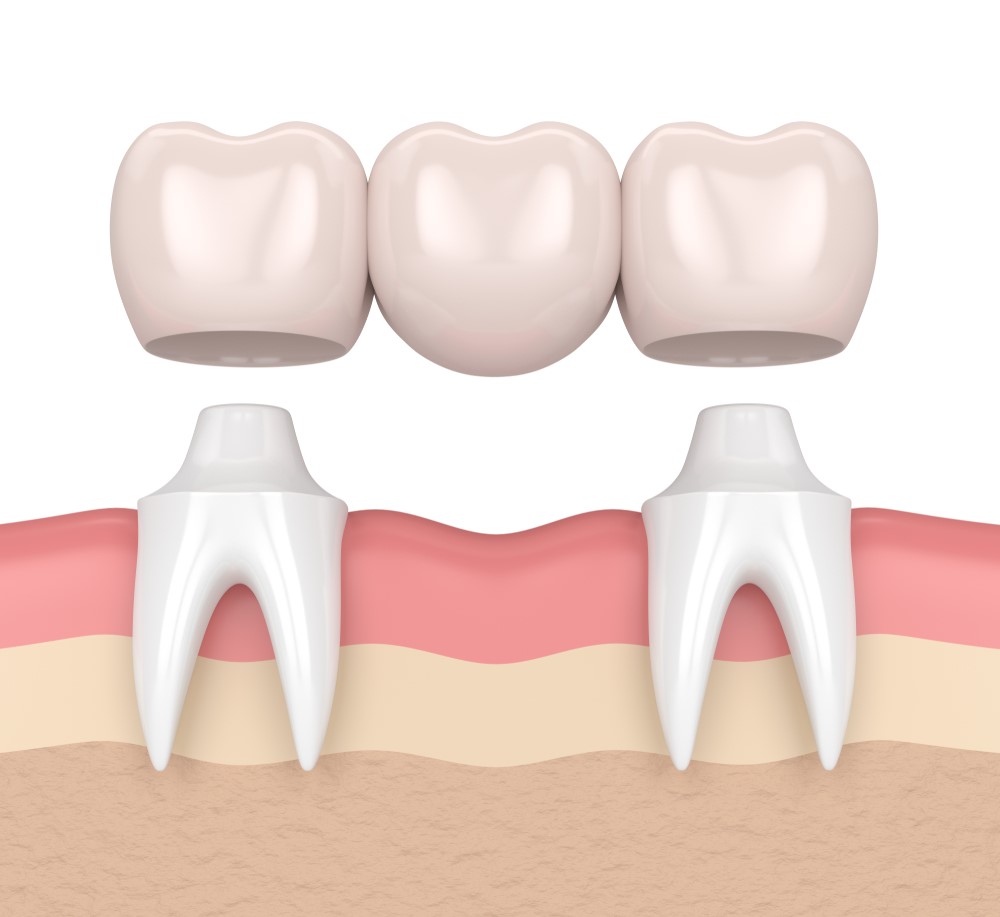
Bridges are prosthetic restorations, with which we replace one or more missing teeth. For its placement, we use as supports the natural teeth that are on the sides of the gap that has arisen after the loss of a tooth.
These adjacent teeth are ground – as in the case of sockets – to fit the construction onto them. In the middle there are one or more artificial teeth that will cover the gap. After grinding, we take impressions so that the artificial tooth and the crowns have the appropriate dimensions and the correct fit. Of course, in order to be able to place a bridge, natural teeth-supports must be healthy and stable.
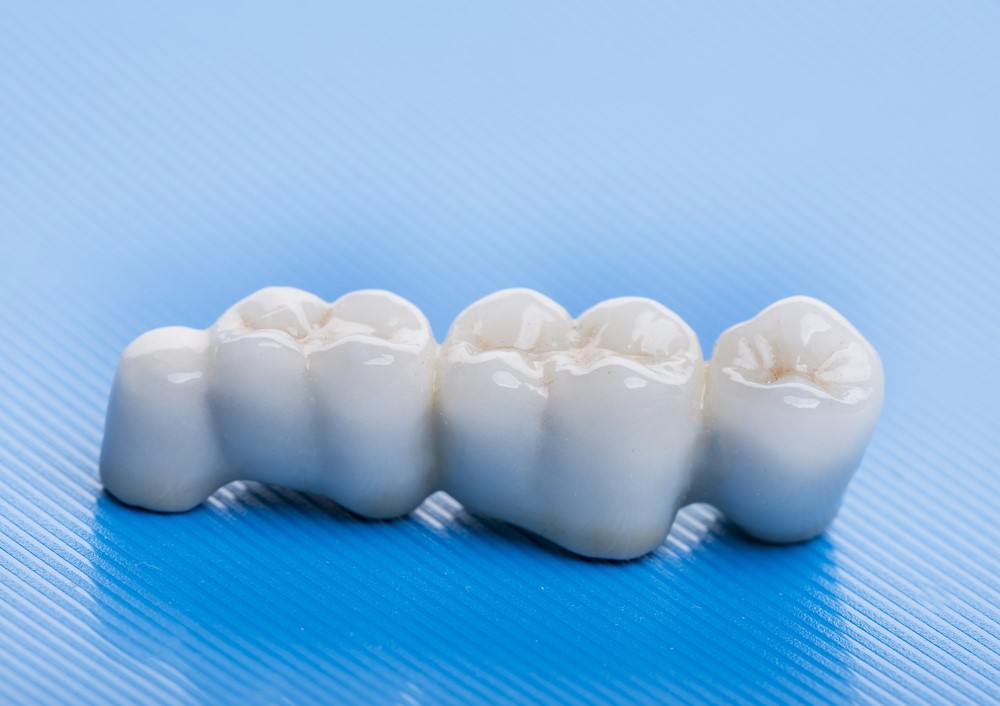
The bridge is a very important prosthetic work that effectively protects the oral health of the patient and prevents serious future problems. After the loss of a tooth, the adjacent teeth begin to move towards the gap as they no longer find lateral resistance. At the same time, the forces exerted on the remaining teeth during chewing are not evenly distributed, resulting in damage to some of them. Bridges restore these functional problems to a satisfactory degree, while at the same time enabling us to smile again with confidence and without hesitation.
The lifespan of a bridge can reach 10-15 years, but this depends on the consistent observance of oral hygiene rules. Natural teeth that act as abutments and are covered by crowns can again be affected by cavities near the gum line and also develop periodontal disease. In these cases we have to remove the structure and proceed with treatment.
As in crowns, so in bridges, the material that excels aesthetically is all-ceramic, because it offers a natural appearance.
Book an Appointment Online
The booking process is quick and simple – it only takes a few minutes to schedule your appointment online.